
Are you renovating your home in Barcelona and your contractor has mentioned plasterboard? It’s perfectly normal if alarm bells start ringing.
You’ve probably heard it’s “like cardboard,” that it can’t hold the weight of a TV, or that you’ll be able to hear your neighbours breathing.
Don’t worry — it’s the most common fear before starting a renovation. But the reality in modern construction is very different when you’re working with true professionals.
At Solera Reformas we don’t make empty promises or sell you things that don’t exist. Our goal is for you to have complete peace of mind during and after your renovation.
That’s why, in this guide, we’ll explain what plasterboard actually is — no boring jargon — and why, when properly installed, it’s your best ally for a fast, rubble-free renovation.
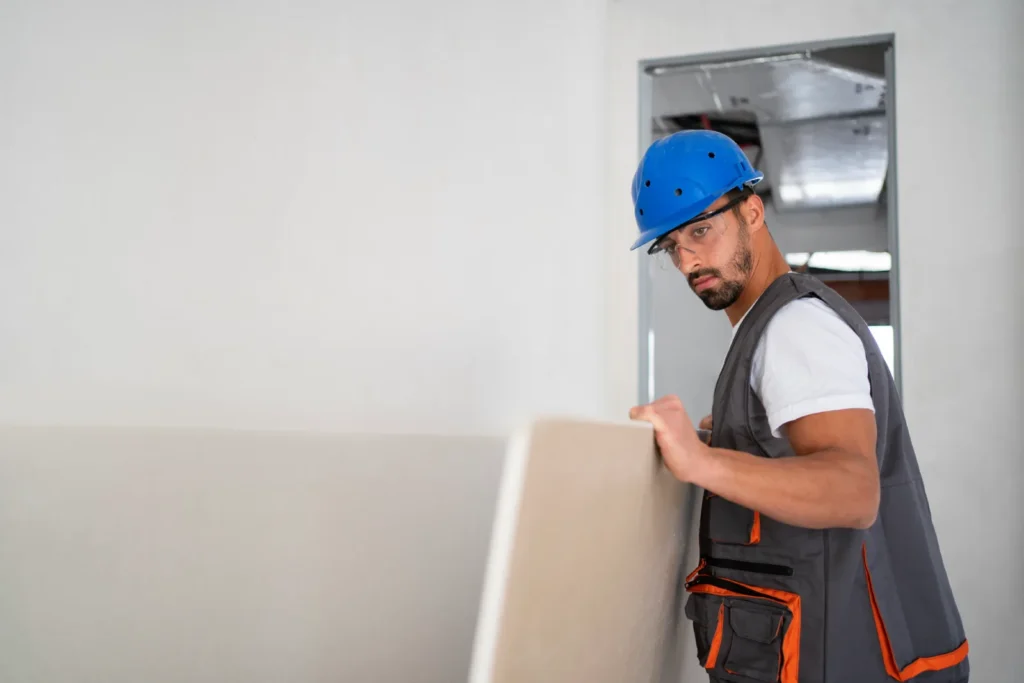
What is plasterboard in plain English?
Technically, this material is called laminated gypsum board (or LGB). “Pladur” is simply the most well-known brand name in Spain — the same way people say Hoover instead of vacuum cleaner.
To make it easy to picture, imagine a high-tech construction sandwich. The filling is a core of top-quality hardened gypsum.
The “bread” wrapping and protecting it consists of two very thin but extremely resistant layers of cellulose or specially treated cardboard.
The result? Solid, smooth panels, perfect for building partition walls, lowering ceilings, or cladding old walls with damp or insulation problems.
Forget the mental image of fragile cardboard that collapses if you look at it. When these boards are screwed onto a galvanised steel frame, they become genuinely rock-solid.
What’s more, inside that metal frame we always add insulating material. That’s the key difference between a hollow partition that sounds like a drum and a solid wall that truly insulates.
Plasterboard vs Brick vs Plaster (The Definitive Comparison Table)
When it comes to dividing spaces or carrying out a plasterboard renovation at home, the same question always comes up in our client meetings.
What’s better — the classic option (brick), the old-school choice (plaster), or next-generation laminated gypsum board?
At Solera we’re 100% transparent: brick has its place in exterior walls and load-bearing structures. But for interior partitions, the story changes completely.
Here’s the real comparison, unfiltered, so you can make the best decision for your home:
| Feature | Plasterboard (Gypsum Board) | Traditional Brick | Plaster |
|---|---|---|---|
| Build time | Very fast (dry construction) | Slow (requires drying time) | Medium (very messy) |
| Cleanliness | Zero wet rubble | Dust, water, and cement | Constant white dust |
| Sound insulation | High (with internal rock wool) | Medium/Low (transmits vibration) | None (decorative only) |
| Wall finish | Perfectly smooth (ideal for painting) | Requires plastering and sanding | Smooth but very fragile |
| Running services | Simple (through the hollow cavity) | Walls must be chased out | Not suitable for partitions |
| Value for money | High (saves hours of masonry work) | Low (more labour hours) | Economical but limited |
As you can see, the age-old debate between plasterboard and traditional plaster has a straightforward answer: plaster today is only really used for decorative mouldings or classic ornate ceilings.
And in the battle against brick, plasterboard wins by a landslide when it comes to sound insulation and site cleanliness.
With plasterboard we avoid chasing, mixing mortar, and dragging the renovation out by weeks. Your home is yours again much sooner and without the headaches.
The real advantages of renovating with plasterboard
If you still have doubts about accepting that quote for your full renovation, let’s be very practical about it.
We’re not going to bore you with material specification sheets. We’re going to tell you how this affects your daily life, your nerves, and your wallet.
These are the three reasons why at Solera Reformas we are absolute advocates of this system:
Faster, drier, and cleaner renovation work
Building a traditional brick partition involves mixing cement, water, and sand, and putting up with endless drying times.
Plasterboard is what we in the trade call “dry construction.” The boards come ready-made from the factory, are cut to size on site, and screwed directly into place.
- Zero waiting time: No need to wait for wall mortar to dry before painting or continuing work in the room.
- Less rubble: Forget heavy bags of building waste going down in the lift and leaving a trail of dust throughout your building’s stairwell.
- Services hidden in record time: Electrical conduit and water pipes run through the hollow cavity inside the frame. No chasing walls, no hammering, and no brick dust.
Acoustic and thermal insulation: Say goodbye to neighbour noise
This is where brick loses the battle completely. A plasterboard partition lets you pack its “stomach” with a remarkable material: rock wool or fibreglass.
This material absorbs sound spectacularly well. If you want to divide spaces with plasterboard — for example, separating the living room from the main bedroom — you simply won’t hear the TV through the wall.
On top of that, it acts as a powerful thermal barrier against both cold and heat. Your home will maintain its temperature far more effectively, which translates into direct savings on your energy bill every month.
A perfectly smooth finish (Ideal for paint or wallpaper)
A brick wall needs layer upon layer of hand-applied plaster (render) to end up even reasonably straight. And there are almost always imperfections that show up in raking light.
Laminated gypsum boards come perfectly smooth, square, and level straight from the factory.
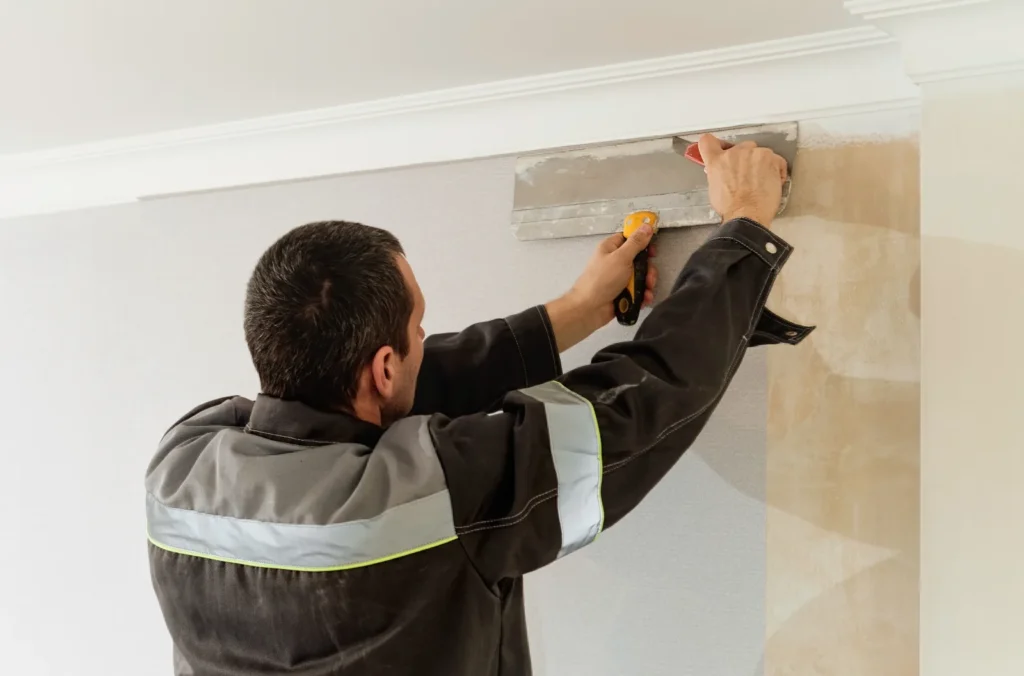
The installer only needs to tape and fill the joints between boards. The result is an immaculate canvas, perfect for painting in solid colours or applying wallpaper without the slightest bump showing through.
Myths, mistakes, and the “downsides” of plasterboard: What nobody tells you
As the honest consultants we are, we’ll tell you the truth straight: plasterboard isn’t magic — it has its rules.
The supposed disadvantages of plasterboard only appear when it’s installed by someone without experience (the classic cowboy builder who charges half the going rate).
Let’s knock down the big myths that frighten homeowners in Barcelona:
- Myth 1: “I can’t hang my TV or heavy furniture on it.” Completely false. A standard plasterboard wall can hold up to 30 kg per fixing point using specialist plasterboard wall anchors. If you’re going to hang kitchen cabinets or a 75-inch TV, we simply add wooden or metal reinforcements inside the partition before closing it up. It will hold whatever you throw at it.
- Myth 2: “The walls sound hollow and papery.” This only happens if the company you hired tried to cut corners and didn’t install the internal rock wool insulation. With our working method, that will never happen in your home.
- Myth 3: “One hard knock and you’ve got a massive hole.” It’s true that brick is harder against a direct hammer blow. But in the unlikely event of damage from moving furniture, the repair is incredibly quick: cut out the damaged section, tape in a new patch, fill, and paint. With brick you’d have to chip it all out and call the plasterer back in.
The only real “drawback” is that it requires highly skilled labour. A traditional old-school bricklayer rarely knows how to tape plasterboard joints so they’re completely invisible. You need a professional dryliner.
Types of plasterboard: Which one goes in the bathroom and which in the living room?
Not all gypsum boards are the same. A good installer will know exactly which material to use in each area of your home to prevent future damp or cracking.
There are several types of plasterboard depending on their composition, and it’s vital that your detailed quote specifies clearly which is being used where:
- Standard plasterboard (Grey/White): The undisputed king of renovations. Used for the vast majority of partitions, dividing rooms, and creating false ceilings in hallways and living rooms.
- Moisture-resistant plasterboard (Green): Its core and outer facing have a special treatment to repel humidity. It’s essential in bathroom and kitchen renovations to prevent mould caused by condensation.
- Fire-resistant plasterboard (Pink): Contains calcium sulphate and fibreglass, which significantly slows the spread of flames. Used near fireplaces, in commercial kitchens, or to comply with fire regulations in commercial premises.
- High-impact plasterboard (Yellow): Super-reinforced boards for high-traffic areas or places where heavy repeated impacts are expected (such as hospitals, schools, or car parks).
As you can see, the key to a long-lasting renovation isn’t the material itself — it’s having a company that uses the right board in the right place.
Frequently Asked Questions (FAQ) about Plasterboard
It’s natural to still have questions turning over in your mind. Here we answer directly the questions our Barcelona clients ask us most often before signing a quote:
What happens if plasterboard gets wet from a leak?
If it’s standard board (grey) and suffers a constant water leak, it will swell, lose its rigidity, and the affected section will need replacing. That’s exactly why in bathrooms and wet areas we always install green (moisture-resistant) board, which handles water and splashes without any problem.
Is plasterboard actually flammable?
False. The natural gypsum inside it is not flammable. In fact, all boards comply with strict European fire safety regulations. And if you need an extra level of protection, the pink board acts as a genuine firebreak.
Which blocks noise better, plasterboard or brick?
Plasterboard, without any doubt. A simple brick partition transmits sound vibrations from one room to another. A properly built plasterboard partition includes an air cavity filled with acoustic insulation, creating a barrier that absorbs your neighbours’ voices and TV noise.
Can plasterboard be installed without plastering?
Yes — and that’s precisely its great advantage. Plasterboard doesn’t need a thick coat of plaster like brick does. A specialist filler compound is simply applied over the joints and screw heads. Once dry and lightly sanded, it’s ready to paint.
How long does a plasterboard wall last in good condition?
Exactly as long as the building structure itself. If it doesn’t suffer extreme damp or major structural impacts, a laminated gypsum wall will last a lifetime without requiring any special maintenance.
Thinking about dividing spaces or renovating with plasterboard in Barcelona?
Traditional renovations are almost always synonymous with stress, dust in every corner of the house, and deadlines that are never met.
Choosing plasterboard for your next project is choosing directly for your peace of mind. You’ll have a home with perfectly smooth walls, thermally efficient spaces, and everything finished in record time.
But remember our warning: the material is only as good as the hands installing it. Poor joint taping will ruin the final result in your living room.
At Solera Reformas we specialise in dry construction and full renovations in Barcelona. We work fast, clean up at the end of every working day, and leave no hidden surprises on your final invoice.
Want to know how much your idea would cost or how to redistribute your space? Message us on WhatsApp right now and tell us what you have in mind. We’ll give you an honest, expert quote with zero fluff.